
40 Italian Restaurant Menu Ideas + Prices for 2026
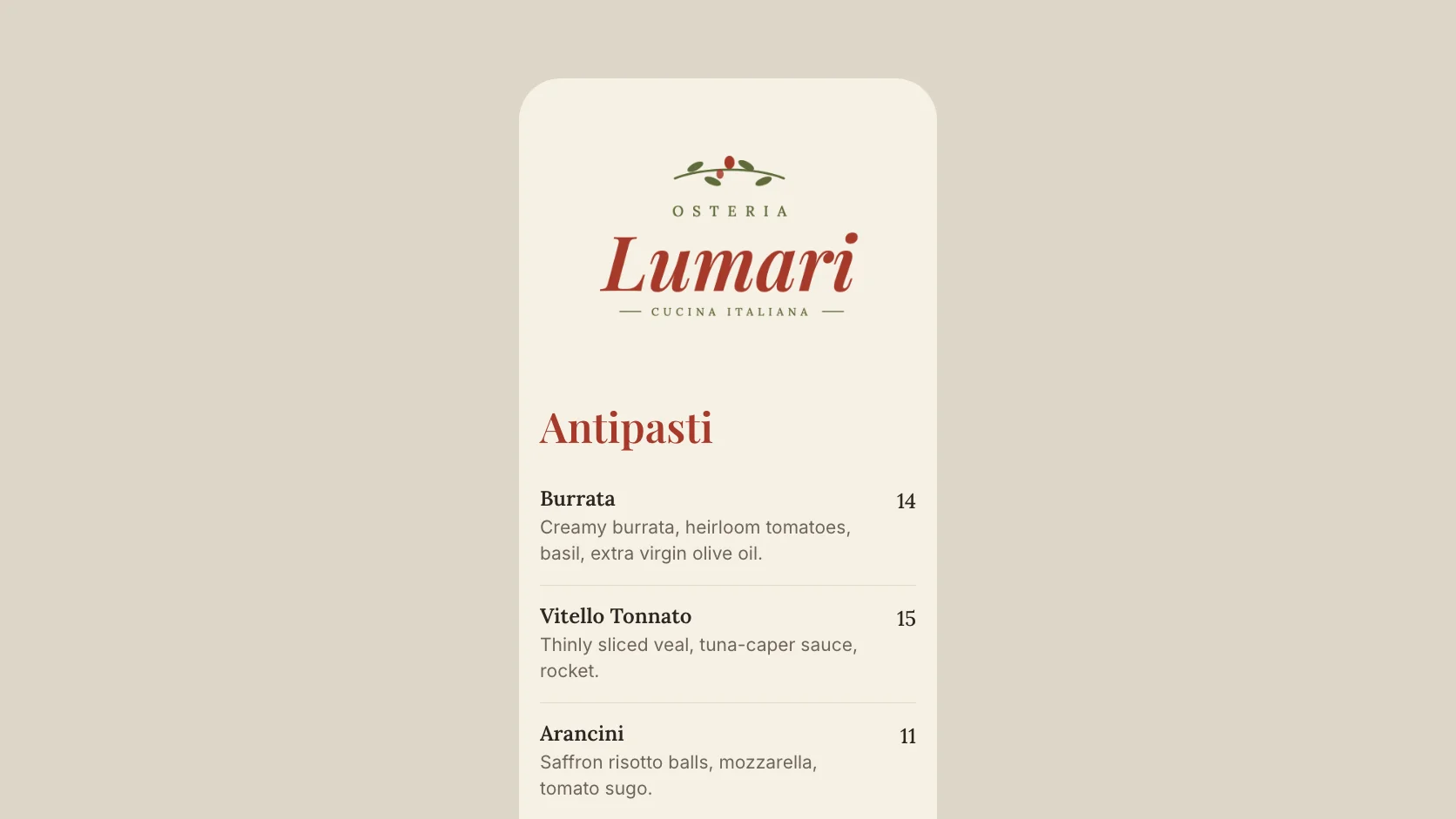
Italian food is built on a simple idea: a few great ingredients, treated with respect.
That's what makes it such a strong cuisine for restaurants. Pasta, tomatoes, olive oil, flour and cheese are affordable, many dishes can be prepped ahead, and customers already know and love the classics. A well-run Italian restaurant can deliver excellent margins while still feeling generous.
The traditional Italian menu structure — antipasti, primi, secondi, contorni and dolci — also gives you a natural way to encourage guests to order more than one course.
If you're opening an Italian restaurant, trattoria or osteria, or refreshing your current menu, here are 40 Italian restaurant menu ideas with suggested 2026 prices to help you get started.
Note: Prices below are suggested starting points for a U.S.-based casual to mid-range Italian restaurant. Your ideal prices will depend on whether you make fresh pasta in-house, ingredient quality, portion size, location and competition.
Antipasti (starters)
Antipasti open the meal and pair perfectly with an aperitivo. Many are assembled rather than cooked, which keeps the kitchen fast.
1. Burrata — $15
Creamy burrata with heirloom tomatoes, basil and extra virgin olive oil. One of the most-ordered Italian starters today.
2. Bruschetta — $10
Grilled bread with tomato, garlic, basil and olive oil. Cheap to make and easy to vary with seasonal toppings.
3. Arancini — $11
Crispy saffron risotto balls stuffed with mozzarella, served with tomato sugo. Great use of leftover risotto.
4. Fritto misto — $16
Lightly fried calamari, shrimp and vegetables with lemon and aioli.
5. Carpaccio — $16
Thinly sliced raw beef with arugula, capers, parmesan and lemon.
6. Vitello tonnato — $15
Thinly sliced veal with a creamy tuna-caper sauce. A Piedmontese classic that sets your menu apart.
7. Tagliere (meat and cheese board) — $24
Prosciutto, salami, mortadella, pecorino, parmigiano, olives and focaccia. Perfect for sharing.
8. Focaccia — $7
Warm house focaccia with rosemary and sea salt. Charge for it, or offer it free as a signature touch.
9. Caprese salad — $13
Fresh mozzarella, tomato, basil and olive oil.
10. Polpette — $13
Beef and pork meatballs braised in tomato sauce with parmesan and grilled bread.
Primi: pasta and risotto
Pasta is the heart of most Italian menus — and usually the most profitable section. Fresh pasta lets you charge more and stand out.
11. Spaghetti al pomodoro — $17
Spaghetti with San Marzano tomato sauce, basil and parmesan. Simple, but customers will judge you on it.
12. Cacio e pepe — $19
Tonnarelli or spaghetti with pecorino romano and black pepper. A Roman classic with very low food cost.
13. Carbonara — $21
Guanciale, egg yolk, pecorino and black pepper — no cream. One of the most popular pasta dishes in the world.
14. Amatriciana — $20
Bucatini with guanciale, tomato, chili and pecorino.
15. Bolognese — $22
Tagliatelle or pappardelle with a slow-cooked beef and pork ragù.
16. Lasagna — $22
Layers of fresh pasta, ragù, béchamel and parmesan, baked until golden. Easy to batch and portion.
17. Pesto alla genovese — $19
Trofie or linguine with basil pesto, potatoes and green beans.
18. Rigatoni alla vodka — $20
Rigatoni in a creamy tomato-vodka sauce with chili. Hugely popular in Italian-American restaurants.
19. Linguine alle vongole — $26
Linguine with fresh clams, garlic, white wine, chili and parsley.
20. Gnocchi — $20
Potato gnocchi with brown butter and sage, sorrentina (tomato and mozzarella) or gorgonzola cream.
21. Ravioli — $23
Fresh ravioli filled with ricotta and spinach, or seasonal fillings like butternut squash.
22. Mushroom risotto — $24
Carnaroli rice with porcini and mixed mushrooms, parmesan and butter. Add truffle as a premium upgrade.
Secondi (main courses)
Secondi are protein-focused mains. They have a higher food cost but raise the average check.
23. Chicken parmigiana — $25
Breaded chicken cutlet with tomato sauce and melted mozzarella, served with spaghetti. An Italian-American must-have.
24. Chicken piccata — $25
Pan-fried chicken with lemon, capers and white wine butter sauce.
25. Veal saltimbocca — $32
Veal escalopes with prosciutto and sage in a white wine sauce.
26. Osso buco — $38
Braised veal shank with gremolata, served with saffron risotto. A special-occasion dish.
27. Branzino — $34
Whole or filleted roasted sea bass with lemon, herbs and olive oil.
28. Bistecca (grilled steak) — $42
Grilled ribeye or sirloin with arugula, parmesan and rosemary potatoes. For a big-ticket option, offer a Florentine T-bone for two.
29. Eggplant parmigiana — $22
Layers of fried eggplant, tomato sauce, mozzarella and parmesan — a hearty vegetarian main.
Contorni (sides)
30. Rosemary roast potatoes — $7
Crispy potatoes with rosemary and garlic.
31. Sautéed broccolini — $8
With garlic, chili and lemon.
32. Arugula salad — $8
Arugula, shaved parmesan and lemon olive oil.
33. Grilled vegetables — $8
Zucchini, eggplant and peppers with olive oil and herbs.
Dolci (desserts)
Italian desserts are well known, easy to prepare ahead and pair beautifully with coffee and digestivi.
34. Tiramisu — $10
Espresso-soaked ladyfingers with mascarpone cream and cocoa. The most popular Italian dessert.
35. Panna cotta — $9
Silky vanilla cream with berry compote or caramel.
36. Cannoli — $9
Crisp shells with sweet ricotta, chocolate chips and pistachio.
37. Affogato — $8
Vanilla gelato with a shot of hot espresso.
Italian drinks
38. Aperol spritz — $12
The classic Italian aperitivo. Offer Campari and limoncello spritzes too.
39. Negroni — $14
Gin, Campari and sweet vermouth — the essential Italian cocktail.
40. Italian wine by the glass — $11–$16
Chianti, Montepulciano, Barbera, Pinot Grigio and Prosecco cover most tastes. If wine is important to your restaurant, a dedicated wine list makes it easier to show regions, grapes and prices.
Finish the meal with espresso ($3.50), cappuccino (before noon, if you're traditional!) and digestivi like limoncello or amaro ($9–$12).
Italian restaurant menu price list for 2026
| Menu category | Suggested price range |
|---|---|
| Antipasti | $7–$16 |
| Sharing boards | $20–$28 |
| Pasta (primi) | $17–$26 |
| Risotto | $22–$28 |
| Secondi | $22–$42 |
| Contorni | $7–$8 |
| Dolci | $8–$10 |
| Cocktails | $12–$14 |
| Wine by the glass | $11–$16 |
These numbers aren't fixed. Restaurants making fresh pasta in-house, or located in big cities, often charge considerably more. A neighborhood trattoria in a smaller town may price lower.
How many items should an Italian menu have?
Italian menus can grow fast, especially with pasta. But a focused menu is easier to execute and keeps ingredients fresh.
For many Italian restaurants, 25–35 items is plenty. A practical menu might include:
- 6–8 antipasti
- 6–8 pastas and 1 risotto
- 4–5 secondi
- 3–4 contorni
- 3–4 dolci
Rotate seasonal pastas — like pumpkin ravioli in fall or asparagus risotto in spring — to keep the menu interesting.
If you also serve pizza, see our pizza menu ideas and the pizza menu template.
How to price an Italian menu
Pasta is one of the most profitable dishes in any restaurant. Dried pasta costs very little per portion, and even fresh pasta made in-house is inexpensive in ingredients — the real cost is labor.
- Pasta and risotto often run at a 15–25% food cost.
- Secondi with meat or fish usually run higher, around 30–40%.
- Antipasti like bruschetta and focaccia are very low cost, while burrata and cured meats are higher.
Balance high-margin pastas with premium secondi, and highlight your most profitable dishes on the menu. Use our free menu price calculator to price each dish, or read our guide on how to price menu items.
Italian menu design tips
- Use the traditional structure — antipasti, primi, secondi, contorni, dolci — with simple English descriptions.
- Keep Italian names, but describe the dish so customers know what they're ordering.
- Mark vegetarian and gluten-free options. Offer gluten-free pasta if you can.
- Highlight house-made pasta — it signals quality and justifies higher prices.
- Suggest wine pairings next to dishes to increase wine sales.
Our Italian restaurant menu template helps you build a clean, elegant, mobile-friendly menu with a QR code.
Example Italian restaurant menu
Antipasti
Burrata — $15
Bruschetta — $10
Arancini — $11
Tagliere — $24
Primi
Spaghetti al Pomodoro — $17
Cacio e Pepe — $19
Carbonara — $21
Tagliatelle Bolognese — $22
Rigatoni alla Vodka — $20
Mushroom Risotto — $24
Secondi
Chicken Parmigiana — $25
Branzino — $34
Osso Buco — $38
Contorni
Rosemary Potatoes — $7
Broccolini — $8
Dolci
Tiramisu — $10
Panna Cotta — $9
Affogato — $8
Frequently asked questions about Italian restaurant menus
What should be on an Italian restaurant menu?
A typical Italian menu includes antipasti like burrata and bruschetta, a range of pasta dishes and risotto, a few secondi like chicken parmigiana and fish, simple contorni (sides), classic desserts like tiramisu and panna cotta, plus Italian wines, aperitivi and espresso.
What are the most popular Italian dishes?
Lasagna, spaghetti bolognese, carbonara, fettuccine alfredo, chicken parmigiana, rigatoni alla vodka, risotto, bruschetta, burrata and tiramisu are among the most popular Italian dishes in the U.S.
What is the order of courses on an Italian menu?
The traditional order is aperitivo, antipasti, primi (pasta, risotto, soup), secondi (meat or fish), contorni (sides), dolci (dessert), followed by coffee and a digestivo.
How much does pasta cost at a restaurant in 2026?
At a U.S. Italian restaurant, pasta dishes typically cost around $17–$26. Simple pastas like pomodoro and cacio e pepe sit at the lower end, while seafood pastas and fresh filled pasta sit at the higher end.
What is a good food cost for an Italian restaurant?
Many Italian restaurants aim for an overall food cost of around 25–30%. Pasta dishes often run much lower, which helps balance higher-cost secondi.
Should an Italian restaurant use a QR code menu?
Yes. A QR code menu makes it easy to update seasonal pastas, daily specials and wine lists without reprinting, and guests can browse the full menu on their phone.