
How to Write Menu Descriptions That Sell (With 50+ Examples)
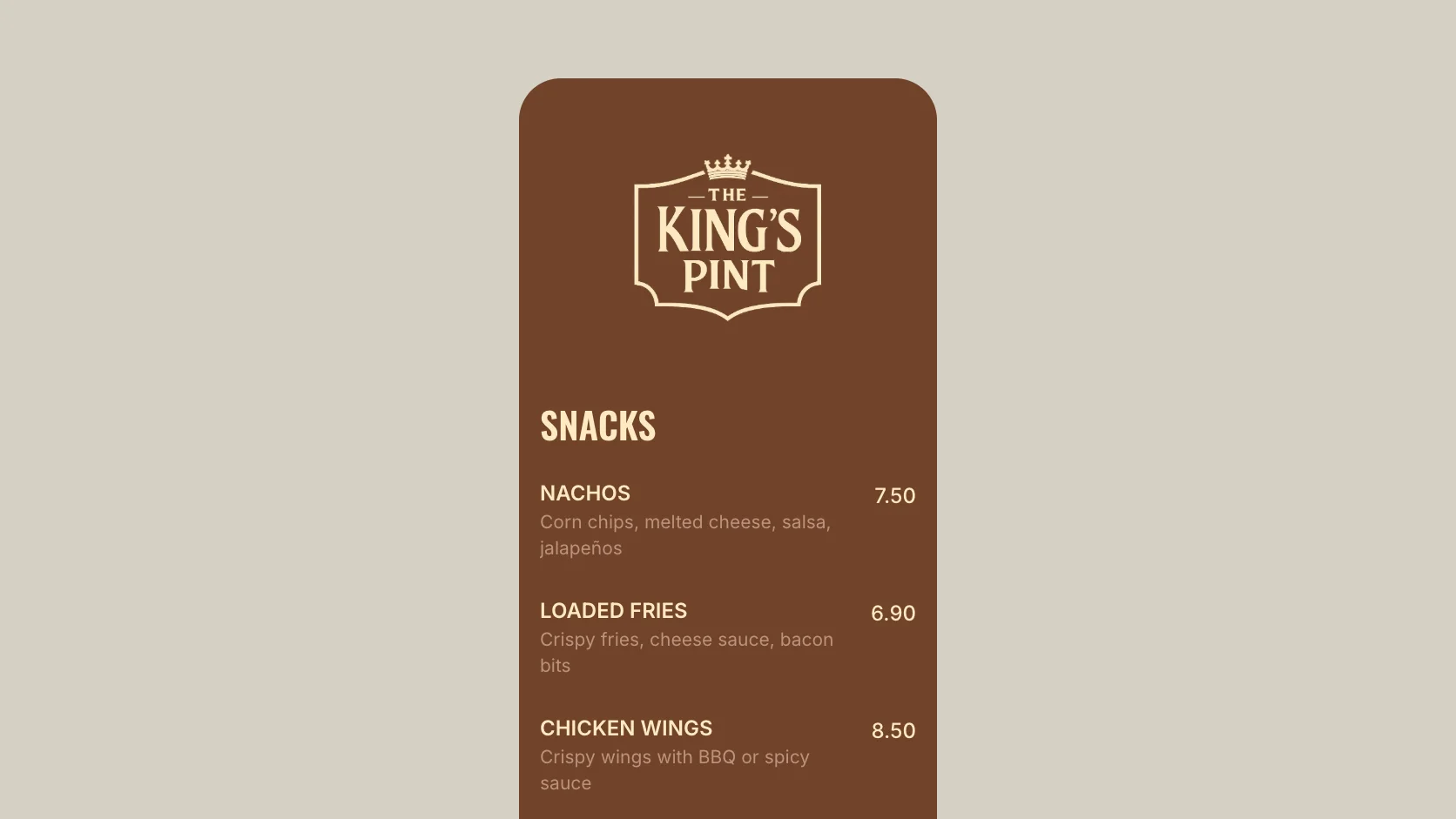
Two restaurants can serve exactly the same dish at exactly the same price — and one sells twice as many. Very often, the difference is the menu description.
A good menu description does three things: it tells guests what they'll get, makes them want it, and helps them feel the price is fair. A bad one is either so short it says nothing ("Chicken pasta") or so long nobody reads it.
In this guide you'll learn a simple formula for writing menu descriptions, see before-and-after examples for every part of the menu, and get a list of descriptive words you can use right away.
Why menu descriptions matter
Menu descriptions affect more than you might think:
- They increase sales. Descriptive, appetizing language makes dishes more appealing and can lift orders on items you want to sell.
- They justify the price. "Braised short rib" feels worth more than "beef".
- They reduce questions. Guests don't need to ask staff what's in every dish.
- They prevent disappointment. Guests know what to expect, so fewer dishes get sent back.
- They help with allergies and diets. Clear ingredients make ordering safer.
- They help your SEO. When your menu is online, dish descriptions help search engines understand what you serve.
The menu description formula
A good menu description usually follows this order:
Main ingredient → Cooking method → 2–3 key supporting ingredients → One sensory or origin detail
For example:
Pan-seared salmon with lemon butter, crushed new potatoes and charred broccolini.
Slow-braised short rib, creamy parmesan polenta, red wine jus and crispy shallots.
Most descriptions should be 8–20 words — one line or two at most. Customers scan menus quickly, especially on phones.
Before and after: menu description examples
Starters
| Before | After |
|---|---|
| Chicken wings | Crispy chicken wings tossed in honey-chipotle glaze with blue cheese dip. |
| Soup of the day | Today's soup, made fresh each morning with seasonal vegetables and served with warm sourdough. |
| Calamari | Lightly fried calamari with lemon, chili flakes and garlic aioli. |
| Bruschetta | Grilled sourdough, heirloom tomatoes, garlic, basil and extra virgin olive oil. |
| Nachos | Tortilla chips piled with melted cheddar, black beans, jalapeños, pico de gallo and guacamole. |
Salads
| Before | After |
|---|---|
| Caesar salad | Crisp romaine, shaved parmesan, garlic croutons and our house Caesar dressing. |
| Greek salad | Ripe tomatoes, cucumber, red onion, Kalamata olives and creamy feta with oregano and olive oil. |
| Beet salad | Roasted beets, whipped goat cheese, candied walnuts and orange vinaigrette. |
Mains
| Before | After |
|---|---|
| Burger | Two smashed beef patties, American cheese, pickles and house sauce on a toasted potato bun. |
| Chicken pasta | Penne with grilled chicken, sun-dried tomatoes and spinach in a creamy garlic-parmesan sauce. |
| Steak | 12 oz dry-aged ribeye, grilled over charcoal, with peppercorn sauce and hand-cut fries. |
| Fish and chips | Beer-battered cod, thick-cut chips, mushy peas and homemade tartar sauce. |
| Curry | Tender chicken simmered in a rich, mildly spiced tomato-butter sauce. Served with basmati rice. |
| Vegetable stir fry | Wok-tossed seasonal vegetables and crispy tofu in ginger-garlic sauce over jasmine rice. |
Desserts
| Before | After |
|---|---|
| Chocolate cake | Rich three-layer chocolate cake with dark chocolate ganache and vanilla cream. |
| Cheesecake | Creamy New York cheesecake with a buttery graham crust and fresh berry compote. |
| Ice cream | Two scoops of house-made vanilla bean ice cream with salted caramel sauce. |
| Apple pie | Warm spiced apple pie with flaky butter pastry and a scoop of vanilla ice cream. |
Drinks
| Before | After |
|---|---|
| Lemonade | Freshly squeezed lemonade, lightly sweetened, with fresh mint. |
| Margarita | Blanco tequila, fresh lime and orange liqueur with a sea salt rim. |
| Latte | Double shot of our house espresso with velvety steamed milk. |
| IPA | Local hazy IPA — juicy, tropical, 6.5% ABV. |
Descriptive words for food menus
Use these words to make dishes more vivid — but choose ones that are true for the dish.
Texture: crispy, crunchy, flaky, tender, velvety, silky, creamy, fluffy, juicy, sticky, melt-in-your-mouth, buttery, chewy, crumbly
Flavor: smoky, tangy, zesty, savory, sweet, spicy, peppery, nutty, earthy, rich, bright, herby, caramelized, charred
Cooking method: slow-roasted, wood-fired, pan-seared, char-grilled, braised, smoked, hand-pulled, stone-baked, crispy-fried, toasted, whipped, cured
Freshness and quality: house-made, hand-cut, freshly baked, seasonal, local, farm-fresh, small-batch, heritage, wild-caught, dry-aged, organic (only if certified)
Comfort and emotion: classic, homestyle, grandma's recipe, signature, chef's favorite, our famous, comforting
Tips for writing better menu descriptions
Lead with the hero ingredient
Guests scan for the main ingredient first. "Grilled salmon with…" is easier to read than "A delicious dish featuring…".
Be specific
"Cheese" says little. "Aged white cheddar" says a lot. "Tomatoes" vs. "heirloom tomatoes", "fries" vs. "hand-cut fries" — specificity sells.
Mention the cooking method
Methods like wood-fired, slow-braised or charcoal-grilled suggest time, skill and flavor.
Name the origin when it matters
"Maine lobster", "San Marzano tomatoes", "Wagyu beef" or "local farm eggs" add value — but only if it's true.
Keep it short
Most guests read the first few words and decide. Cut filler like "delicious", "tasty" and "mouthwatering" — show it through specific details instead.
Use the dish name to do some work
A good name plus a short description beats a long description. "Hot Honey Burger — two smashed patties, pepper jack, pickled jalapeños and hot honey" is easy to remember and easy to order.
Tell a story — occasionally
"Nonna Maria's lasagna, made to the same recipe since 1972" can be powerful. Save stories for one or two signature dishes per menu.
Include what guests need to know
Portion size (12 oz, 6 pieces), spice level, and dietary labels (V, VG, GF) should be clear. For allergen and ingredient details, our free ingredient label generator can help.
Common menu description mistakes
- Too short: "Pasta." Guests don't know what they're ordering.
- Too long: Paragraphs of text that nobody reads.
- Vague adjectives: "Delicious", "amazing", "yummy" add nothing.
- Listing every ingredient: Including salt, pepper and oil makes descriptions harder to scan.
- Pretentious language: Overly fancy wording can confuse or put off guests.
- Untrue claims: Calling frozen fries "hand-cut" or regular beef "Wagyu" damages trust — and may break the law in some places.
- Inconsistent style: Some items with long descriptions, others with none.
- Spelling mistakes: They look unprofessional and make guests question the kitchen.
Write descriptions for your most profitable dishes first
You don't need to rewrite your whole menu at once. Start with the dishes you most want to sell — usually your most profitable items.
This is a key part of menu engineering: using descriptions, placement and highlights to promote high-margin dishes. Read our full guide on menu engineering to find out which dishes to focus on.
Menu description templates you can copy
Use these patterns as a starting point:
- [Cooking method] [main ingredient] with [ingredient], [ingredient] and [sauce].
- [Main ingredient], [ingredient], [ingredient] — finished with [garnish or sauce].
- Our signature [dish]: [key detail], [key detail] and [key detail].
- [Origin] [main ingredient], [cooking method] and served with [side].
- [Portion] [main ingredient] [cooking method], [sauce], [side].
Examples:
- Wood-fired chicken with lemon, garlic, rosemary potatoes and salsa verde.
- Burrata, heirloom tomatoes, basil — finished with aged balsamic.
- Our signature smash burger: double patty, melted American, house sauce.
- Wild-caught Alaskan salmon, pan-seared and served with herb rice.
- 10 oz sirloin char-grilled, peppercorn sauce, hand-cut fries.
Put your descriptions on a menu that's easy to update
Once you've written great descriptions, test them. Try a new description for one dish, track sales for a few weeks, and adjust.
That's much easier with a digital menu. With mmmmenu, you can edit dish names and descriptions anytime, add dietary labels and photos, and publish a mobile-friendly QR code menu — no reprinting needed.
Need inspiration? Our menu ideas guides include ready-to-use descriptions for burgers, pizza, Italian, Mexican, steakhouse and pub food menus. You can also start from a ready-made pub food menu template.
Frequently asked questions about menu descriptions
How long should a menu description be?
Most menu descriptions should be around 8–20 words — one or two short lines. Signature dishes can be slightly longer if you include a short story.
What should a menu description include?
Include the main ingredient, cooking method, two or three key supporting ingredients or sauces, and one detail that makes the dish special — such as origin, texture or a house-made element. Add portion sizes and dietary labels where useful.
What words make food sound appealing on a menu?
Specific sensory words work best: crispy, tender, smoky, creamy, charred, tangy, slow-roasted, wood-fired, house-made, hand-cut and freshly baked. Avoid vague words like "delicious" and "tasty".
Do menu descriptions increase sales?
Yes. Clear, descriptive language helps guests imagine the dish, makes it feel more valuable and can increase orders — especially for dishes you highlight on the menu.
Should every menu item have a description?
Most items should. Very simple items like soft drinks, fries or espresso may not need one, but keep your style consistent across each section.
How do I write a menu description for a simple dish?
Focus on what makes it good: quality ingredients, a cooking method or a house-made element. For example, "Hand-cut fries, twice-cooked and tossed with sea salt."